


WHITE PAPER
The Road Ahead – Is decentralisation the key to unlocking hydrogen in public transport?

Written By IMI Publications
June 8, 2026
Unlocking hydrogen’s great promise
Hydrogen is the subject of great excitement and expectation, supporting the move from fossil fuels towards greener energy sources. This interest is explained by its value when used as a fuel. Hydrogen is dense with energy, burns cleanly and can deliver near-zero carbon emissions when produced using renewable energy. It’s an ideal candidate for the energy transition. Many ‘hard to abate’ industries, including refining, aviation and shipping all have active research and development programmes.1 Yet, even with backing from investors and interest from large corporates, full-scale adoption remains elusive. The general challenges are well known. It’s still expensive to produce hydrogen, high volume storage is lacking and the wider infrastructure needed for deployment is not
sufficiently developed. Nevertheless, low-emission hydrogen production is expanding rapidly and it will play an increasingly significant role in the world’s energy mix.2 What is less clear are the opinions and priorities of those with a stake in the success of hydrogen, such as the operators of public transport. As important end-users, the insights of decision-makers in this market are key to addressing – and eventually removing – barriers to entry. However, there is little publicly available research or this kind, making it harder for organisations to plan and respond effectively. This provides the basis for IMI’s latest market research, which examines the views of decision-makers working in transport across Europe.
Transport was chosen for three reasons. Firstly, because many companies are actively developing hydrogen fleets despite a lack of centralised fuelling infrastructure.3 Secondly, because hydrogen has the potential to solve some of the challenges ound with today’s battery-powered fleets – such as weight, range and grid strain. Finally, the cost of decentralised electrolysis and storage is now beginning to fall, though there is little research into this aspect of the hydrogen economy.
The latter is especially important given the fragility of Europe’s power network.4 Electric vehicles (EVs) have clearly made more progress when compared to fuel cell vehicles, though these fleets may soon become harder to manage with grid shortfalls and ongoing electrification across all levels of society. Those relying solely on one type of mobility could find themselves in an untenable position when there’s not enough power to satisfy demand, as there has been several times in recent years.5 This is where hydrogen can play a critical role. But what’s needed to accelerate its development? And how important is decentralised production to the wider process? This report examines those questions in more detail.
Who did IMI interview?
300 decision-makers working in public transport
Regions: UK, Germany, Italy
Field research date: July 2024
Research conducted by: independent market research agency Censuswide
Percentages have been rounded up or down to the nearest whole number for clarity. The questions and answer options featured in this report were developed with Censuswide, a market research consultant independent of IMI. Responses were collected using a standardised half-open interview format. The results were summarised by Censuswide, with both qualitative and quantitative results provided to IMI once interviews were complete.
Perceptions
How does transport view hydrogen?
Decarbonisation has created a split in the transport market. To date, EVs have dominated short-haul freight and last-mile fulfilment, with the total cost of ownership for these vehicles falling rapidly. Longhaul freight, however, is still considered unsuitable for today’s EVs, with longer distances, uneven terrain, weight and slow charging times all proving a challenge.6
These issues are less apparent for hydrogen transport. Fuel cells and fleets equipped with hydrogen internal combustion engines are not only lighter but can also fill up at stations along highways much in the same way as today’s petrol and diesel fleets. Refuelling is immediate and there is no need to connect to the grid. But how has this split shaped the sector’s opinion of hydrogen? And what is expected to be the dominant form of mobility?
Hydrogen is holding its value...
Even with concerns about a lack of current fuelling infrastructure, at 89% the vast majority of respondents said hydrogen will be effective for overcoming the limitations of battery technology. Of that number, just over a third (34%) said it will be very effective. This sentiment was also seen across the different European countries polled, where at least 80% said it will be either somewhat effective or very effective.

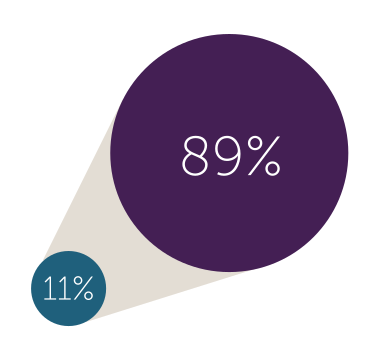
Most respondents (89%) believe hydrogen-powered fleets can effectively address battery technology limitations, while only 11% disagree.
...but there are barriers
Zoning regulations – i.e planning and safety permissions – was selected most often when respondents were asked about the barriers hindering their use of hydrogen. This was followed by physical space requirements and funding. However, there was a relatively even split across all the options provided. That pattern was also observed in the different regions polled.
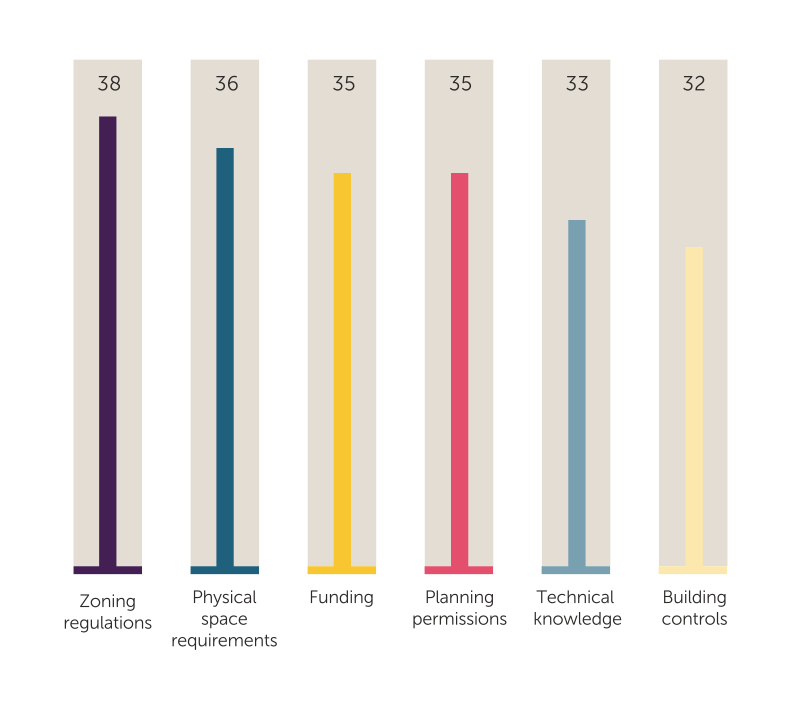
Zoning regulations and space requirements are the most commonly cited barriers, closely followed by funding and planning constraints.
It’s a complex picture
Hydrogen has value in transport – and is being actively pursued – but it’s still an ill-defined proposition for most respondents.
Overall, 83% of respondents said it would be feasible to decarbonise public transport without any use of hydrogen. However, this headline finding again fails to provide the full picture: of that number only 27% said it would be entirely feasible, while 56% said somewhat feasible. This split was largely the same for the different countries polled, albeit with some minor differences. Almost 90% in the UK said it would be feasible, though this region had the largest percentage of those who chose somewhat feasible.
Germany and Italy had a higher percentage of people who said it would be entirely feasible, yet both regions also had a fifth who said it would be unfeasible. These results reveal a contradiction. On one hand, the sector believes hydrogen will eventually solve the issues found with EVs; on the other, many believe EVs will become the dominant form of transport through the energy transition, irrespective of their shortcomings.
This uncertainty can be explained by the slow roll-out of hydrogen within transport – as well as the recent growth and success of EVs. It’s not unreasonable to imagine these opinions shifting as the sector becomes more familiar with hydrogen and where it can be used most effectively.
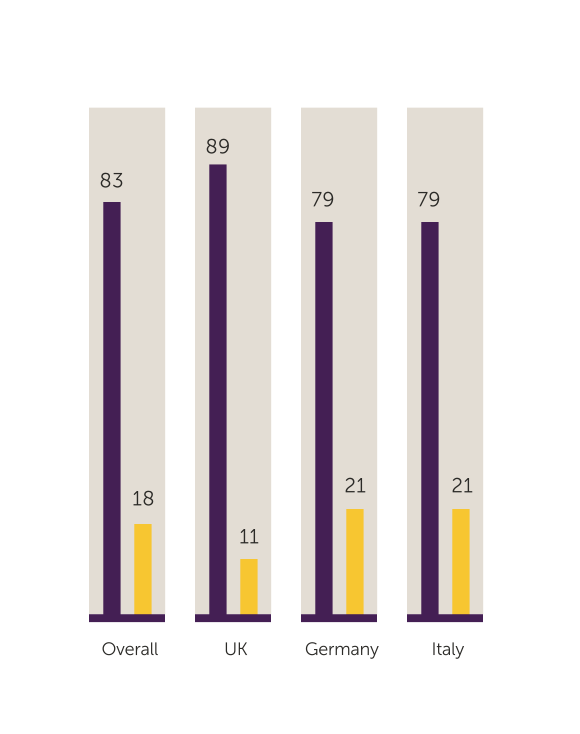
A majority across all regions view decarbonisation without hydrogen as feasible, with the highest confidence seen in the UK.
What do these results tell us?
There are a number of technical and financial barriers to negotiate before hydrogen can be fully realised within public transport – and this is shaping the sector’s current view. Yet, even with some hesitance, there is still interest in the fuel and its role for moving fleets away from diesel.
On-site generation may prove the ideal option in this market, allowing transport networks to trial vehicles without having to wait for the development of fuelling stations. However, any electrolyser would need to limit its footprint given space concerns.
Priorities
What does transport need to make hydrogen a success?
The direction of travel for public transport in Europe is clear. The three markets examined in this report – the UK, Germany and Italy – have all laid out emissions reduction plans for their bus networks as part of a wider strategy to achieve net zero in the sector.
And orders for hydrogen-powered fleets continue to be announced, even with fuelling infrastructure still in its earliest stages of development.7 These orders highlight a level of enthusiasm for an economy that’s at least partly powered by the fuel. But does the sector need to sustain and embed hydrogen long term?
Funding is essential for the expansion of on-site production
There is still demand for government incentives despite increased investment and a growing interest in the hydrogen economy. Almost three-quarters of respondents (73%) said they would consider on-site hydrogen production to fuel their fleet if there was sufficient funding in place; 24% said they would not. These splits were almost identical across the UK, Germany and Italy.
Similarly, 82% said more government funding is needed to drive the adoption of hydrogen fuels to decarbonise public transport. Of that number, 33% strongly agreed. At 85%, Italy had the highest ‘net agree’ score (i.e. number of those who chose somewhat agree or strongly agree), followed by the UK and Germany at 83% and 78% respectively.
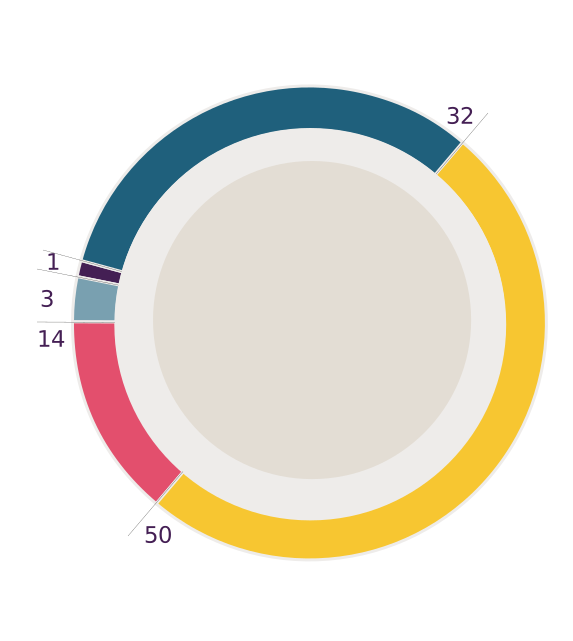
Over four in five respondents (82%) agree that increased government funding is needed to support hydrogen adoption in public transport, with minimal opposition (4%).
Vehicle costs and technical knowledge are key concerns
Cost and technical knowledge within an organisation were most selected by respondents when asked about the key considerations before ordering new vehicles. However, there was a relatively even split across all ten options provided.
In the UK, the most-selected options were size of vehicles and technical knowledge. For Germany, it was the ability for vehicles to handle local terrain; in Italy, it was cost. Again, the splits were relatively even across all ten options.
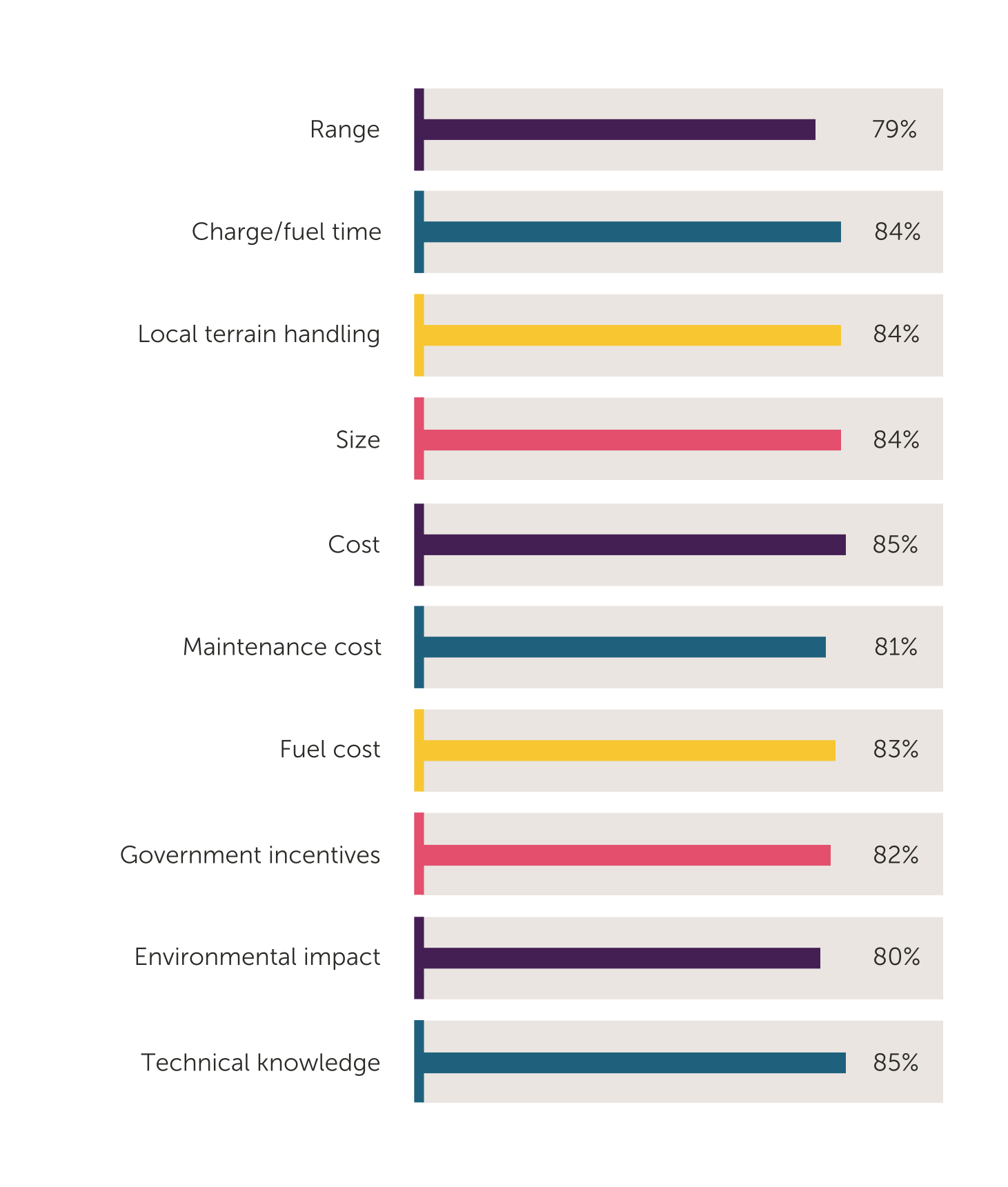
All factors are seen as highly important when ordering new vehicles, with cost and technical knowledge leading at 85%, and even the lowest ranked factor, range, still scoring 79%.
What do these results tell us?
Return on investment is important for any organisation, but it takes on greater significance in the public sector, especially when projects are in receipt of funding.
What’s needed is proof of concept: first to alleviate concerns about hydrogen’s role in transport, and second to ensure vehicles can be fuelled without having to wait for large, centralised production to come online.
This is challenging with a lack of in-house technical knowledge also figuring high on people’s list of concerns, but leaves open the opportunity for closer work with developers of smaller-scale electrolysers.
Working this way will minimise risk and allow transport managers to demonstrate the value of hydrogen transport – an important advantage given vehicles are already being ordered.
Where are the potential stumbling blocks?
According to the International Energy Association, hydrogen must be adopted in sectors where it’s ‘almost completely absent’ – such as transport, buildings and power generation – if it’s to make a significant contribution to the energy transition.8 This assessment presents a problem because it hints at the vast level of development needed to make hydrogen a success in transport – development that is far from established. Yet it’s known public transport networks are already in the process of ordering hydrogen fleets.
These two positions are difficult to reconcile, but it’s only one challenge for the sector. What other issues could impede the sector’s implementation of hydrogen fuel?
Storage is a major concern...
The ability to store hydrogen safely will be key moving forward. Overall, 72% said that storage safety was a significant barrier to their deployment of hydrogen-powered vehicles. Just over a fifth (24%) said it was not a concern. At 76%, the UK had the highest percentage of people who said it was a barrier or concern, followed by Italy and Germany at 73% and 66% respectively.
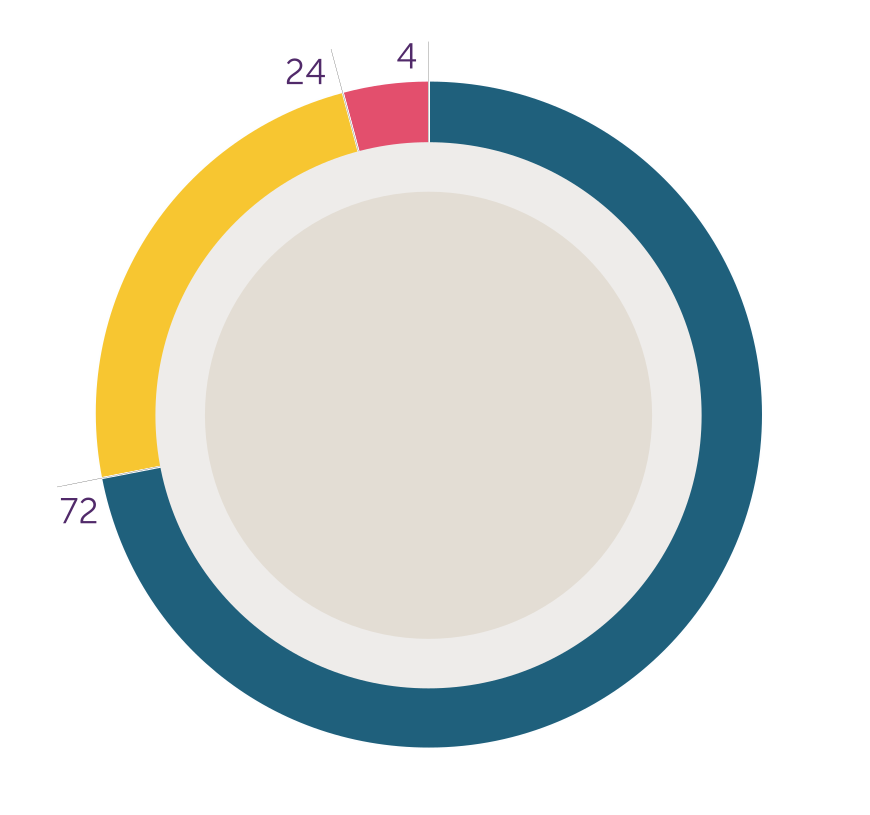
A clear majority (72%) identify storage safety as a significant barrier to deploying hydrogen-powered vehicles, while nearly a quarter (24%) do not see it as a concern and a small minority (4%) remain unsure.
...yet hydrogen fleets are expected to grow
Almost three-quarters of respondents said they expect to increase the size of their fleet over the next decade. A majority in each region polled said the same.
But the value of storage – and particularly decentralised storage – takes on greater significance when looking at the sector’s short-term plans. For instance, a fifth (21%) said they had already purchased hydrogen vehicles, while 61% said they would be investing within the next two years. However, only a quarter of respondents (26%) said they already have access to permanent fuelling infrastructure.
By region, the majority said they would be ordering hydrogen vehicles
within the next two years. In Italy, just over half (51%) said they would have new vehicles within the next year.
Given the current lack of largescale production and distribution across Europe, decentralisation is the strongest candidate for what is meant by permanent fuelling infrastructure. Without this supply in place, transport will have to focus on smaller, localised electrolysers with sufficient storage capacity; not only to access enough fuel but also to justify its investment into hydrogen-powered fleets.
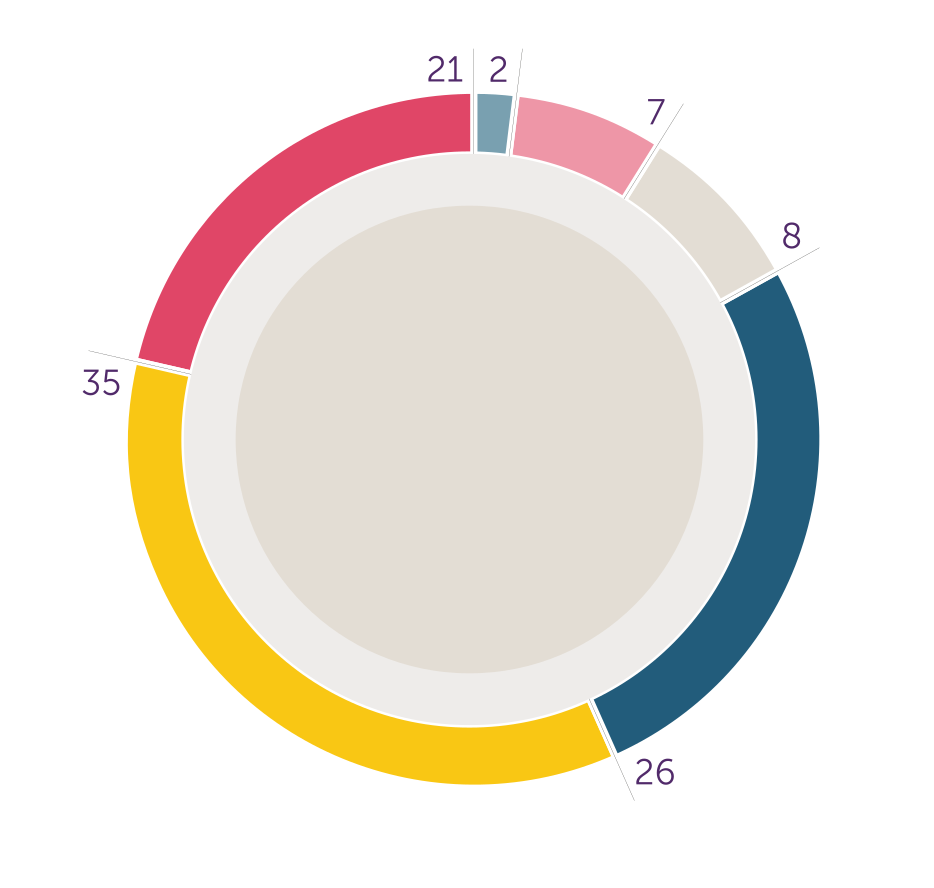
One-third (33%) expect to invest in hydrogen vehicles in the mid term, while 24% plan earlier adoption and another 24% follow similar near-term timelines. A further 26% expect longer-term investment.
There is arguably too much faith in the grid’s ability to deliver clean electricity…
Overall, 81% of respondents said they were confident securing enough clean electricity from the grid, despite the challenges of increasing electrification. Just under a fifth (18%) were not confident.
Germany had the closest split between those who were confident and not
confident – 64% and 35% respectively. Meanwhile both the UK and Italy had a higher ‘net confident’ percentage (i.e. those who said somewhat confident or very confident) when compared with the overall score. While Europe’s grid is increasingly renewable, there is still some way to go before transport can rely on power that is confidently ‘green’. It’s also far from stable, and its condition has left hundreds of projects stuck waiting for a connection.9 This is a challenge for the development of EVs and hydrogen, though the latter is not solely dependent on the grid for mobility, particularly when the fuel is made using electrolysers on site.

One-third (33%) expect to invest in fuelling infrastructure in the mid term, while 24% plan earlier and 24% near-term timelines. A further 26% expect longer-term investment, with smaller shares at 9%, 7% and 1% indicating later plans or uncertainty.
…not least because there are concerns about capacity
Overall, 93% said they were concerned about the capacity of their grid connection for both current and future fleet requirements. Only 7% were unconcerned.
These results were also seen by region. In all countries polled, at least 88% said they were concerned. There was also a significant percentage of people in each country who said they were ‘very concerned’ about grid capacity. In Italy, for example, this figure was 52%.
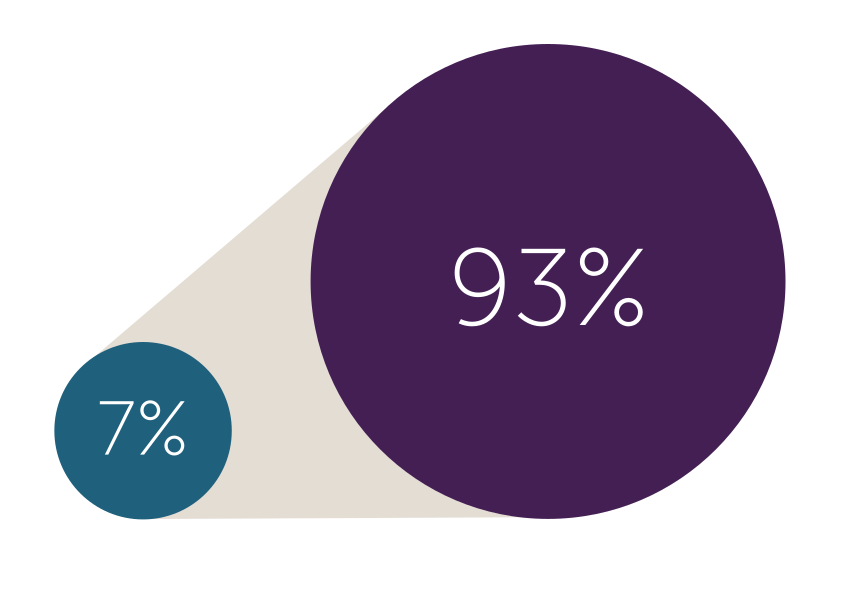
A clear majority (93%) align on this challenge as significant, while just 7% reflect a minority view, indicating limited disagreement.
What do these results tell us?
Demonstrations of safety will be critical for the lasting success of hydrogen in transport, not least because most depots need to generate and store a certain volume of fuel on site throughout the day.
On-site generation with storage seems the best compromise in this respect, as it avoids large deliveries of fuel or the need for installed pipework. Working this way also alleviates some of the concerns around the grid which without major intervention, will prove hugely challenging for operators of both EVs and hydrogen-powered vehicles.
Third-party analysis
Connected Places Catapult
This perspective from Tom Marsh, Systems Engineer at Connected Places Catapult, provides an independent view on the challenges and opportunities shaping hydrogen adoption, including infrastructure constraints, cost pressures and the role of decentralised production.
Distribution raises the cost of any goods requiring transport over large distances. This is especially true for hydrogen, not least because there is currently a lack of infrastructure available to support its storage and use outside of heavy industry. And it’s partly why the cost per kilo for certain types of hydrogen remain higher than traditional fuels used across the transport industry.
Given this situation, it becomes easier to see where decentralised electrolysis can play a role, eliminating the distance between production and end users, and filling in the gaps that large centralised production leaves behind. The value of having electrolysis on-site can already be seen in places like Scotland, where smaller airports in the highlands and islands are actively exploring the fuel’s potential use for powering short flights and airport vehicles. Non-permanent infrastructure, such as construction projects, would also benefit in a similar way as they only require short-term access to fuel but in large enough quantities to power ancillary equipment.
Hydrogen also has a role to play in road freight, particularly for the heaviest and longest-range requirements. But there are still questions to be answered in this space, many of which are being examined by the ongoing zero emission heavy goods vehicles and infrastructure (ZEHID) programme. The outcome of this process may find there are relatively few viable use cases for hydrogen, especially with battery-powered transport relatively further ahead.
However, in my view, it’s likely there will be a role for the fuel – and by
extension on-site electrolysis – due to the costs associated with building large pipe networks and grid constraints highlighted throughout this report.
Decentralisation will be an important cog for unlocking value chain, as an essential transition technology to drive hydrogen adoption before widespread transmission networks are in place. It’s also important to note that centralised production will also drive down the cost of on-site production, as it will encourage a greater number of off-takers. In other words, they aren’t always distinct.
What is clear is the value of companies who are making it easier for organisations to access and trial this type of technology.
Advanced Manufacturing Research Centre (AMRC)
This perspective from James Hunt, Future Propulsion Lead at the Advanced Manufacturing Research Centre (AMRC), explores the role of decentralised electrolysis in both research and real-world applications, alongside the regulatory, cost and infrastructure factors influencing hydrogen adoption in transport.
Decentralised electrolysis is already playing an important role in R&D across Europe. In the UK, significant projects can be found at the universities of Bath, Cranfield and Sheffield, with the latter also a key site in the ongoing development of sustainable aviation fuels. However, this method of production is likely to have lasting value outside of research, including within transport.
Take fuel cell vehicles. The hydrogen needed to power this technology must attain a high degree of purity, but this is something that cannot be guaranteed when relying on large-scale pipework to distribute. Whether entirely new or pre-existing infrastructure is used, the risk of contamination is there, and this will make it harder for organisations to successfully embed hydrogen in transport applications. This isn’t to say centralised production will not play a role – it surely will; it’s just in certain cases decentralisation will be far more practical and economically viable.
From a manufacturing opportunity perspective, the UK’s current position on zero tailpipe emissions is limiting for a more accelerated uptake of hydrogen outside of heavy industry. We already have the supply chain and manufacturing base to develop combustion engines and only minor design changes would be necessary to prepare them for hydrogen fuel. Relaxing this stance could make it cheaper and easier for certain transport applications to transition from diesel and petrol. In this scenario, decentralised electrolysis would be a natural partner, particularly for longer-distance freight, off-highways and construction.
Cost remains a significant barrier for hydrogen. It’s the remit of institutions like the AMRC to address this issue, by working in collaboration with industry and organisations that are actively developing solutions with the potential to unlock the value chain.
Moving the dial
Transport is not yet at the point where hydrogen can be adopted at scale, though there is clearly significant interest in the fuel even with some reservations about its effectiveness. This is best seen in the number of respondents ordering hydrogen-powered vehicles – many without the infrastructure in place to fuel them.
Given this situation, it appears decentralised hydrogen production will have an increasingly important role to play while a larger, centralised network is brought online – that is, if it’s brought online at all. For transport, the case to generate and distribute hydrogen fuel in this way is not as convincing when compared to refining and other heavy industry, simply because it works over a much larger area. In other words, the sector’s needs are more distributed and the way hydrogen is accessed will likely need to respond in kind.
Decentralisation can also alleviate some of the challenges with Europe’s ailing electricity network. The results showed there were clear concerns about grid capacity, yet a large number of respondents also said EVs would be capable of decarbonising transport without use of hydrogen. These positions are difficult to reconcile unless major upgrades are made to the grid. On-site electrolysers may provide a route out this problem, particularly where they are able to harness renewable sources. This is the ideal scenario and has already been seen in some regions, such as the Orkney Islands.10 However, even without abundant clean power, moving hydrogen production closer to where it’s needed makes sense given the growth of distributed energy networks (DERs). Electrolysis using DERs would allow fuel to be produced without such a heavy reliance on the grid, in turn accelerating the move away from diesel.
There can be little doubt this also presents a challenge, but it’s a model that solves some of the key issues transport is facing and these types of incremental gains are often what’s needed to demonstrate proof of concept. This is why IMI is focused on expanding access to on-site electrolysis across Europe.
For more information visit our IMI VIVO brand page.
